 |
|
| node: | Why does 0 come after 9 on the keyboard and not before 1? |
| template: | 4 |
| parent: | Zaujímavosti |
| owner: | repelent |
| viewed by: | |
| created: | 11.05.2015 - 20:54:14 |
|
cwbe coordinatez: 101 63539 4879893 7909045 ABSOLUT KYBERIA |
| permissions | |
| you: | r, |
| system: | public |
| net: | yes |
total descendants::3
total children::3
12 ❤️
| Gerronimo | 0 |
It's very closely related to the development of the QWERTY layout we see on most keyboards, which began with typewriters in the late 1800s.
Early QWERTY typewriters omitted the digits 1 and 0 because letters l (lowercase L) and O (uppercase o) looked close enough/identical in their font. Basically, you could just type a letter l or O and it would look close enough.
Fewer keys on the keyboard would have been easier and cheaper to manufacture - the mechanical linkages were rather complex, and as you add more keys, you run into issues with lack of space and clashing keys.
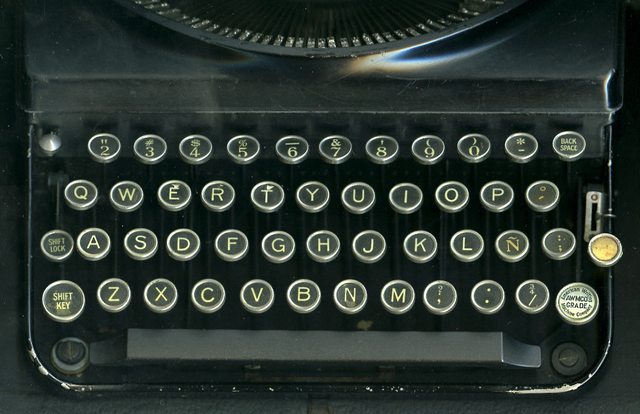
0 was added in a revision before they bothered adding 1, and 023... would have looked odd, so it was added to the end of the number row, after the 9.
A potential reason for adding a 0 but no 1 is because an uppercase letter O for the digit 0 requires the use of the shift key, which is less convenient than the lowercase letter l for the digit 1. Again, they tried to minimize the number of keys.
Then a 1 was added to the beginning of the number row.
https://ux.stackexchange.com/questions/76446/why-is-the-0-next-to-9-not-next-to-1
https://www.reddit.com/r/explainlikeimfive/comments/35kfo0/eli5_why_does_0_come_after_9_on_the_keyboard_and/
Early QWERTY typewriters omitted the digits 1 and 0 because letters l (lowercase L) and O (uppercase o) looked close enough/identical in their font. Basically, you could just type a letter l or O and it would look close enough.
Fewer keys on the keyboard would have been easier and cheaper to manufacture - the mechanical linkages were rather complex, and as you add more keys, you run into issues with lack of space and clashing keys.
0 was added in a revision before they bothered adding 1, and 023... would have looked odd, so it was added to the end of the number row, after the 9.
A potential reason for adding a 0 but no 1 is because an uppercase letter O for the digit 0 requires the use of the shift key, which is less convenient than the lowercase letter l for the digit 1. Again, they tried to minimize the number of keys.
Then a 1 was added to the beginning of the number row.
https://ux.stackexchange.com/questions/76446/why-is-the-0-next-to-9-not-next-to-1
https://www.reddit.com/r/explainlikeimfive/comments/35kfo0/eli5_why_does_0_come_after_9_on_the_keyboard_and/