 |
|
| node: | John Allegro: The Sacred Mushroom and the Cross |
| template: | 4 |
| parent: | ANTIMATRIX |
| owner: | :={outKasted} |
| viewed by: | |
| created: | 02.03.2015 - 15:01:03 |
| updated: | 02.03.2015 - 15:01:37 |
|
cwbe coordinatez: 101 21741 21745 2926717 7854688 ABSOLUT KYBERIA |
| permissions | |
| you: | r, |
| system: | public |
| net: | yes |
total descendants::0
total children::0
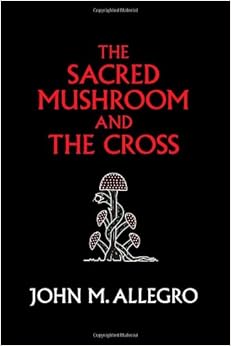
The Sacred Mushroom and the Cross ruined John’s career.
The book was the culmination of twenty years’ study of Semitic and proto-Semitic languages. Allegro hoped it would illuminate the origins of thought, language and religion. People should then be able to better understand where they came from, shed the trappings of religion, and take true responsibility for what they did to each other and their world.
None of this got past the initial shock-waves. The mushroom cloud spread more derision than enlightenment.
Underpinning The Sacred Mushroom is the idea that fertility was of fundamental importance to primitive religion, as it is to life. Allegro set out this concept in a preliminary plan of the book, sent to the publishers Hodder and Stoughton Ltd., on October 23, 1968:
The most important thing in life was life itself, and life is rain. The reasoning is simple. Rain begets vegetation on the earth as spermatozoa beget offspring in the womb. God, the Creator, the source of rain, must therefore be the sperm of creation and the heavenly penis from which it spills. The storm is the orgasm of God. The drops of rain are the ‘words’ of God. Earth is the womb of creation.
In The Sacred Mushroom and the Cross, he ‘set out to trace the expression of this simple philosophy through the sacred literature of the ancient world’.
The clues lay in the development and spread of written language. They criss-cross different cultures and lead into many-layered webs of association. They led Allegro to believe that a fertility cult based on using the sacred mushroom, Amanita muscaria, as a gateway to divine understanding, was at the root of many religions, including early Christianity. The mushroom was seen as a symbol of God on earth. But because mushroom lore was secret, he reasoned that it had to be written down in the form of codes hidden in folk tales.
https://archive.org/details/pdfy-zXNs853PA1cHfHzQ